Monday, August 3, 2020

New Normal Birding

Pittas and kingfishers are among the most colorful birds making them favorites for birders -  photographers and watchers alike.  The Philippines has six Pitta species on record.  One of them, the Blue-winged Pitta is an accidental or rare migrant so the chances of seeing it here are very low.  It was last seen at the Liptong Woodland, Bacong, Negros Occidental in 2018.  Before that, the last sighting was 111 years prior.  The Fairy Pitta was only seen once in the Philippines - in Palawan in 2013 - so that is even a rarer and more accidental migrant.  The remaining four are all residents - Whiskered Pitta, Black-hooded Pitta, Azure-breasted Pitta and the Red-bellied Pitta (recently split and renamed as Philippine Pitta or Blue-breasted Pitta).  The Azure-breasted is found only in Mindanao, Bohol, Samar and Leyte, so good luck with finding that at this time.   I already have great photos of the Whiskered and Hooded so they are not that high on my photo priority list.  But the Philippine Pitta on the other hand remains a high priority because I am not yet fully happy with my shots (bird photographers are greedy, they always want a better shot 😁😁😁).  So when Loel Lamela, my Bird Race Teammate (we were Team Culion with Olanski Balbido), posted a great shot of the Philippine Pitta taken recently, it immediately caught my attention.  

After some haggling on the date and securing the proper birding visas from higher authority, we set July 31 as our D-Day.  Loel has birded a couple of times but for me this was my first birding sortie since Feb 29.  

My habit when birding at the sites near Metro Manila is to prepare everything the night before - my gear (camera, lens, batteries, memory cards, tripod, mosquito repellent, camera rain cover, Madrigal hide, trail food, water, cooler, foldable stool, portable speaker), clothes that I will wear (shirt, pants, socks, shoes, lucky hat), extra shirt, rain jacket, and now things like alcohol, masks, and face shield.  Doing all these preparations felt so good.  Waking up at dawn, a quick shower, dressing up, buying breakfast at Shell Select, meeting up with Loel and driving early along the zigzagging Marilaque Highway with the music of Queen on the playlist never felt better.  

Before long we were entering Palo Alto in Baras, Rizal.  Along the road, we came upon two masked birders who turned out to be Christopher Ferrer and Elmer Budomo.  Pre-Covid, we would stop, disembark and there would be high fives, warm greetings, and some ribbing,  but in keeping with the times, a nod and a wave with a hello at a distance was all we could do safely.  

The first bird we saw was a Whiskered Tree Swift perched on a wire.  Then I saw a Scale-feathered Malkoha fly across the street and perch on top of a tall tree out of my sight. A hundred meters or so, another Malkoha flew across and again entered a clump.  Typical.  Several minutes later, we were at Loel's Pitta site.  We parked and waited inside our cars so as not to spook the bird.  It did not take long before I saw the Philippine Pitta on the ground on the opposite side of the canal.  Aim. Fire. Bird disappears from my site only to see it a split second later chasing after a Hooded Pitta. Both birds disappear.  I check shots, they appear blurred.  I fumble for my reading glasses, and after putting them on, they were indeed blurred!  Aaargh!!!!  I do not know if I was too excited, too out of practice, whatever... to say that I was disappointed is an understatement.  

Here is one of my disappointing shots... 😢😢😢

We waited patiently for more than two hours.  I messaged Loel that if he wanted to go around, he could leave me because the Pitta was really my target.  He decided to leave at around 9:30am.  By 10:30, I decided to drive around and ran into Loel who showed me a nesting Black-naped Monarch.  I stayed for some time at this site and was able to create some good images...

Papa Blue-naped Monarch feeding its chick/s

Mama Blue-naped Monarch

Papa and Mama Monarch

Papa Monarch handing something to Mama Monarch

After getting my fill of the Monarch, I went back to the Pitta site and found Loel gushing about the White-eared Brown Dove that perched in the open (the man has all the luck!).  After an hour or so, Loel wanted to shoot the Monarch.  Along the way he showed me a nesting Balicassiao. I waited for the parent bird to perch and feed the chick and when it did, a leaf covered the head of the adult bird!

Presenting the headless Balicasiao...

The "headless" Balicassiao and its chick

After an hour with the Balicassiao site, I decided to go back to the Pitta site. It was already almost 2pm and I wanted to leave by 3pm.  We played calls occasionally but there was no movement or answering calls whatsoever.  Earlier in the day, we could hear it call from somewhere nearby but not at this time.  At around 2:43pm, I noticed movement under the bushes, Philippine Pitta! It was foraging on the ground but covered, then something spooked it because it suddenly darted back to where it came from.  

Philippine Pitta, foraging under the bushes 

Wait again.  After maybe five minutes, it was there again but it darted back again.  Soon it was 3pm and I was now debating if I should stay or leave already. But knowing that it was just there made me decide to wait a few more minutes. And my waiting was rewarded because it appeared again at around 3:06 and this time it walked into the open (briefly!), allowing us a few captures.  Sharing the most decent of the lot....

Philippine Pitta

It is still not THE shot I am pining for but I will take it. For now...  the quest continues... (bird photographers are a greedy lot...)

I reached home a little before 5pm, tired, but happy that I got to bird, and forget the pandemic for at least a day.  Thank you Lord for the day.  And thank you to my teammate Loel for birding with me.    

Monday, June 8, 2020

Cellphone Birding in Coron (but sadly not my photos) - how Coronians cared for the birds during GCQ

It has been observed that there has been an increase of birds during the quarantine period and Coron was no different.  The following birds were recorded in Coron during the past one and a half months...

May 6th, a nesting Palawan Frogmouth photographed with a cellphone, by Engr. Dominic Urani Lopez, a geodetic engineer.  Engr. Lopez was in the field, surveying a parcel of land when he saw this bird. Location was within Bgy. Poblacion 1. 

Ever since I started birding in August 2012, I have not seen a Palawan Frogmouth in the Calamianes.  I have a photograph of this bird but it was taken in Puerto Princessa (at night). 


A Palawan Frogmouth and her chick.

On May 30, my friend and fellow birder, Renan Bonifacio sent me this beautiful photo of a male Purple-throated Sunbird. He found said bird on his patio, somewhat dazed. Most likely, it slammed into Renan's glass doors.  He immediately picked it up and gave it sugar water to revive its energy.  The bird stayed in his dining room watching Renan eat his lunch!  Later that day, said bird left but not before Renan got a ton of photos and even a video, using only his mobile phone! 

Though I have seen a blurry photo of this bird in Coron, this is the first good photo taken in the Calamianes (that I know of).  This was taken by Renan at his home at Bgy. Decalachao in Coron. About an hour from town and twenty minutes from the Busuanga airport. My photographs of this bird were taken in Bohol, Los Banos, and Puerto Princessa City.  

Purple-throated Sunbird, male

On June 3rd, Marvin Ravile, a free lance tour guide, posted this photos and asked me for identification and advise because the bird appeared weak.  He was on his way home and found this bird on the road near his house (on the ground).  Fearing that kids might find it and play with it, he picked it up and took it home.  I advised him to give it water and to just let it be. It stayed inside his house overnight and part of the next day before it flew away. The photos were taken using Marvin's mobile phone.  Location was in Sitio Balisungan, Bgy. Tagumpay.  About thirty minutes from Darayonan (maybe less if I know there is a Frogmouth waiting).


Palawan Frogmouth

June 6th, Gisel Mosaner, owner of La Natura Resort at Capayas, and a friend, sent me these photos for identification and also for advise as the bird appeared weak.  A Spotted Wood Owl, Gokgok in our Cuyonon dialect.  I suggested to Gisel to give it water and bits of meat.  The bird drank and ate at the table at their restaurant at the resort!  At no time did Gisel attempt to capture the bird.  It left on its own when it was strong enough. 

Though not endemic, in the Philippines, this beautiful owl can only be found in Palawan (it is also found in other parts of South East Asia).  I already have beautiful photos of this bird taken in Coron and in Puerto Princessa but as a fellow birder once said, we bird photographers are very greedy - we always want a better shot!  Seeing this cute juvenile Gokgok pose for Gisel made me want to look for a flight to Coron immediately.  

All photos were taken with a mobile phone.  Location was La Natura Resort at Sitio Capayas, Bgy. Poblacion 6. Twenty minutes from town. 


Spotted Wood Owl

Needless to say, I wish I was there to take these photos but I am very proud of my fellow Coronians for not harming these creatures, and even caring for them.  Big Salute Engr Dominic Lopez, Renan Bonifacio, Marvin Ravile, and Gisel Mosaner!  Bravo!!!  May you serve as an inspiration to our fellow Calamianens!

Thursday, April 9, 2020

Chasing Lifers: The Baihualing Gold Mine Day 3 - pet-Malu

Breakfast at Baihualing started at the crack of dawn, 5am, which was still dark (and very cold!).  The Singaporeans and Chinese guests were always there early because they wanted to be at the hides by 6am.  We pinoys would amble in at around 6am (while the Singaporeans are already hurrying out) and have a leisurely breakfast with the usual wisecracks. We would arrive at the hides around 6:45am. Which was alright with us because light was just starting to be good.  After having porridge on our first day and noodles on the second day, I was already craving for bread or maybe danggit.  But there was no danggit in the mountains of Gaoligong, and the nearest thing to a bread was a white thing that resembled a siopao.  It came with filling (like a siopao) or no filling.  Ramon Quisumbing had been eating that since day 1 with hard boiled eggs, so I decided to copy him.  A siopao bun plus two hard boiled eggs washed down by Old Town 2-in-1 coffee (which I brought), became my breakfast of choice the rest of the mornings. 
Siopao bun (without filling) and two hardboiled eggs washed down with coffee.

Our destination for the day was a hide owned by Jeremy Yip's family (one of several).    Instead of a number, this one was called Malu (or at least it sounded like that).  We were joking that we will probably have a great day because the hide is ''pet-Malu''....

And Malu did not disappoint.  I did not get that many lifers from this hide because many of the birds were "repeat" birds.  But among all the hides we went to at Baihualing, this was my favorite because the shooting area was the best - good light, good background, nice perches, and the hide was spacious. That we got the whole hide for the whole day also helped.  

The lifers from Hide Malu:


Yellow-cheeked Tit


Red-billed Leotrix


Long-tailed Thrush


Fire-tailed Sunbird


Streaked Spider Hunter

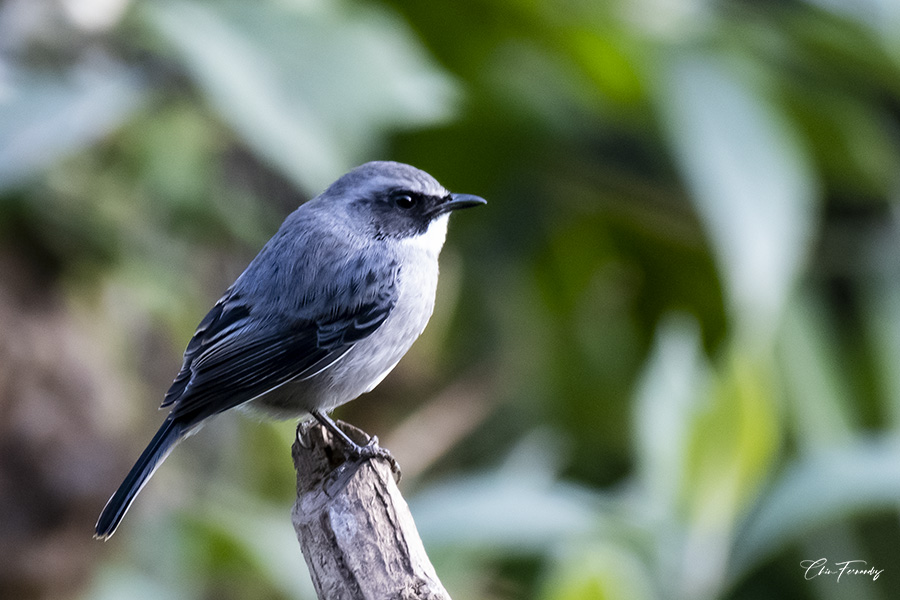
Grey Buschat, female

Grey Buschat, male

Blue-fronted Redstart, male - not a lifer because I got the female the day before


Maroon-naped Accentor

Seven lifers was not high per Baihualing standards but in terms of total species, Hide Malu gave us almost as many (36 species) as Hide # 8 (Day 1, which had 37).  More importantly, it gave so many beautiful photos.  Sharing some of these.

Himalayan Blue Robin, aka Himalayan Blue Tail (female)

Great Barbet

Black-breasted Scimitar Babbler

Himalayan Blue Robin, aka Himalayan Blue Tail (male) 

Rusty-capped Fulvetta

Blue-winged Minla

Red-tailed Minla

Chestnut-tailed Minla

Blue-fronted Redstart, male

Golden Bush Robin

Rufous-gorgeted Flycatcher

Rufous-capped Babbler

Rufous-throated Partridge (three of them!)

Oriental White-eye

Grey-winged Blackbird, male

Aside from these, the Thrushes, the Niltavas, Sibias, Barbets, etc., were also present. 

Hide Malu was also a lot colder than the three previous hides we went to.  Although we were so pre-occupied with the birds that it was already almost noon when I noticed that my heavy coat was still zipped (I usually unzip it when we get to the hides for better mobility) and that I could feel the cold in my toes even if I was wearing two layers of socks.  

Needless to say, we were a bunch of happy birders that night.  

Some scenes at Hide Malu


When we got back to our hotel, Alex, Keith, and I went up to the roof deck to shoot the surrounding area.


Our dinner that night was a farewell of sorts because Ramon and Keith were leaving the following morning.  So after we ate, we signed the big autograph wall and had our group photo taken.

L-R: Atty Ramon Quisumbing, Ben Go, Alex Ting, yours truly, Prof Tirso Paris, Raymond Dan, and Keith Sundiang (aka Shoot Mee).